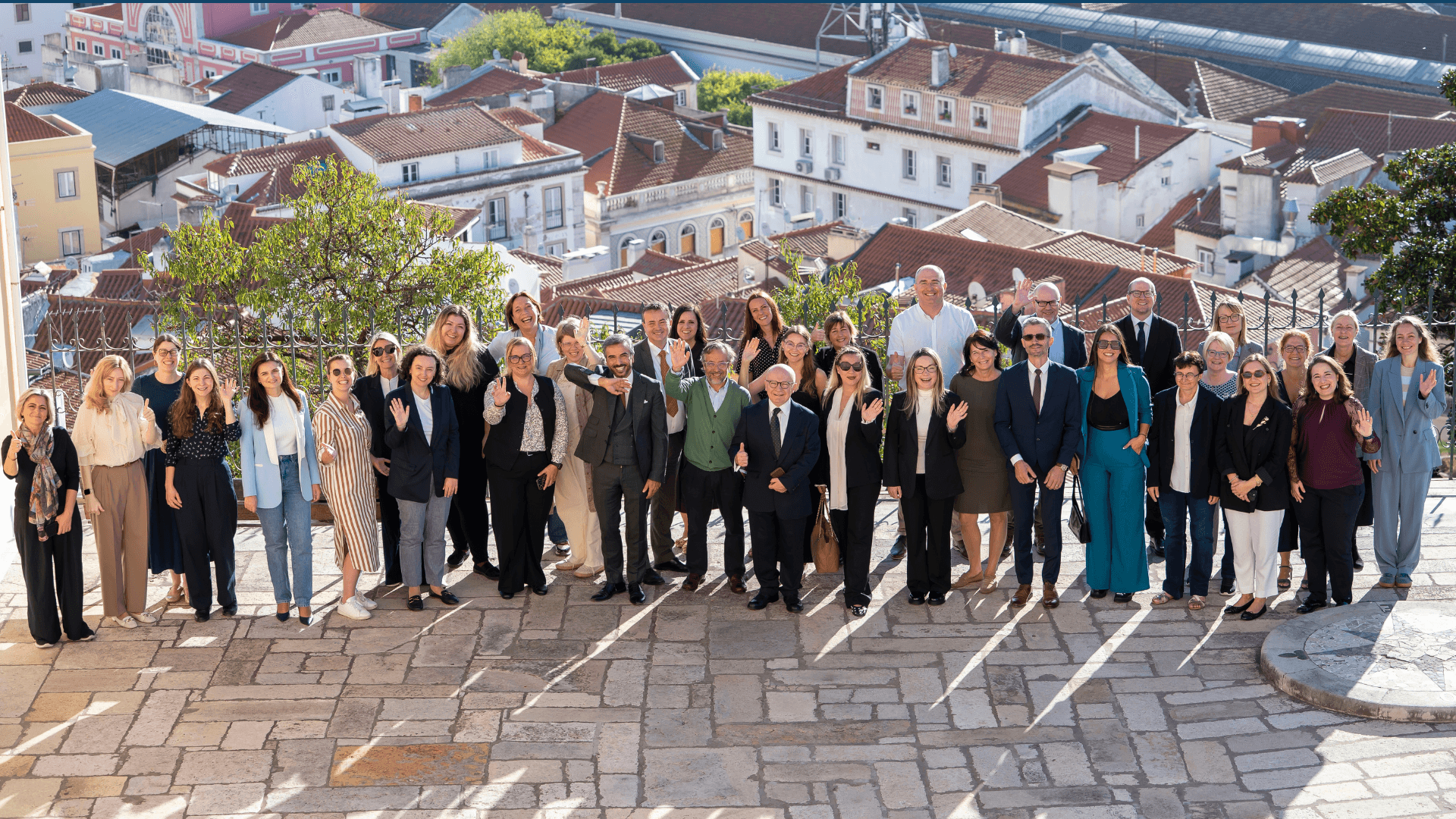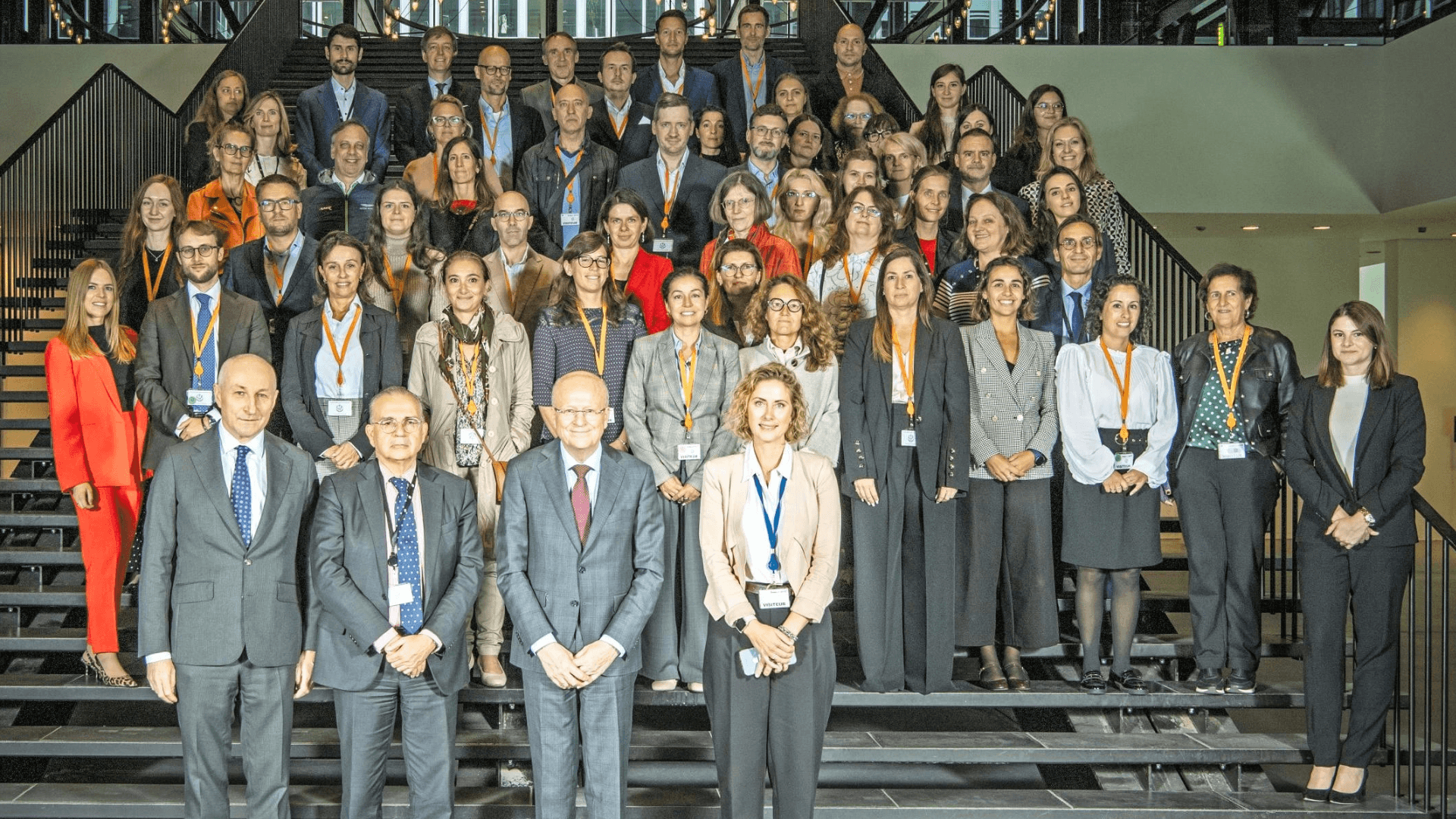
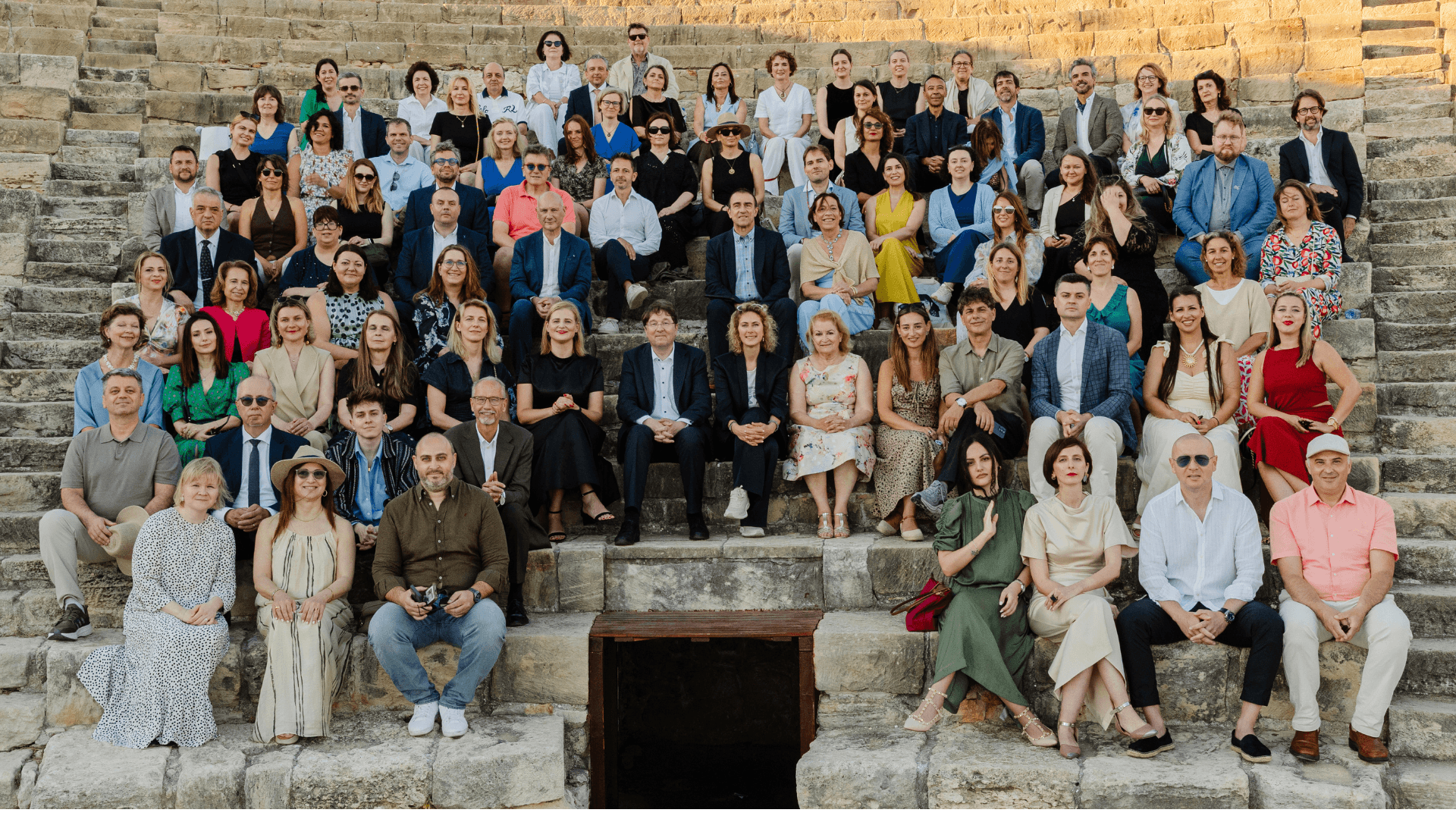
On 18–19 June, the European Judicial Training Network organised its 2026 General Assembly under the Cyprus Presidency of the Council of the European Union and with the support of the Cyprus Judicial Training School. The event took place in Lemesos, Cyprus.
Over 100 delegates, including directors of EJTN members, associate members and observers, as well as representatives of key partners and esteemed guests, attended this year’s General Assembly. Discussions focused in particular on the evaluation of the current EJTN Strategic Plan 2021–2027 and the development of the EJTN Strategic Plan 2028–2034, ensuring full alignment with the European Judicial Training Strategy 2025–2030. The enhanced coordination role of EJTN was also discussed, particularly in relation to future training priorities and cooperation mechanisms.
This year’s General Assembly was opened with interventions by Director Rea Limnatitou of the Cyprus Judicial Training School; Katerina Stamatiou, President of the Supreme Court of Cyprus, and Judge Ingrid Derveaux, EJTN Secretary General.
The EJTN Steering Committee Chair, Raf Van Ransbeeck, presented the 2025 Steering Committee report. In his remarks, he highlighted the extensive work undertaken to evaluate the current EJTN Strategic Plan, as well as the ongoing preparations for future activities and strategic priorities.
EJTN’s five Working Groups (Digitalisation, Exchange Programme, Judicial Training Methods, Linguistics, Programmes) also shared an overview of their accomplishments in 2025 and highlighted their future plans and direction, including stronger coordination at European level.
Strategic reflection tops the agenda
This year’s General Assembly placed a special emphasis on the strategic direction of the Network. As the current EJTN Strategic Plan approaches the end of its term, dedicated workshops explored its purpose, performance and future priorities. Discussions also focused on EJTN’s coordination role, as well as the European Commission’s roadmap for implementation by EU judicial training institutions. A dedicated exchange with EJTN’s strategic partners and stakeholders further examined how to strengthen cooperation in advancing judicial training.
In this context, Wojciech Postulski (European Commission, DG JUST) presented the European Judicial Training Strategy 2025–2030, centred on creating a supportive environment for Digital Justice@2030. A dedicated exchange with EJTN’s strategic partners and stakeholders further examined how to strengthen cooperation in advancing judicial training.
Other contributions addressed key thematic priorities, including an update on the Voice of the Child project, which concluded earlier this year. The materials produced in the framework of this project will be made available for EJTN members, which further highlights the collaborative and coordinative nature of this project.
Connecting with key stakeholders across Europe
This year’s General Assembly provided an important platform for connection and exchange of ideas between EJTN members and key stakeholders in the field of judicial training. Representatives from EJTN’s partner organisations shared valuable perspectives on the current and future training needs of Europe’s justice practitioners, building on the work initiated earlier this year at the 2026 EJTN Training Needs Assembly, as well as on the strategic direction of EJTN for the years ahead.
Discussions emphasized the importance of continued cooperation between EJTN and other EU networks, with stronger focus on coordination at national level and making the most of available tools and resources. Particular attention was given to the role of judicial training in strengthening mutual trust, promoting a shared European legal culture, and safeguarding the Rule of Law and fundamental values.
Thank you to the European Commission, the Court of Justice of the European Union, Eurojust, the European Law Institute, the HELP Programme of the Council of Europe, the European Group of Magistrates for Mediation (GEMME), the European Network of Councils for the Judiciary (ENCJ), European Judicial Network in civil and commercial matters (EJN Civil) and the European Judicial Network in criminal matters (EJN Criminal) for their active participation and contributions.
Moreover, we want to thank the honoured speakers who joined the 2026 EJTN General Assembly to share their insights on the state of European justice: Katerina Stamatiou, President of the Supreme Court of Cyprus; Anna Marcoulli, Judge at the General Court of the European Union; Wojciech Postulski, Team Leader from the European Commission (DG JUST); and Celestina Iannone, Director at the Court of Justice at the European Union, as well as European Commissioner Michael McGrath, who delivered a video message.
In her opening speech, the EJTN Secretary General Ingrid Derveaux underlined the unique role high-quality judicial training plays for the safeguarding of the Rule of Law:
“Judicial training is not only about programmes, methodologies, or exchanges. It is about supporting the daily work of judges, prosecutors, and court staff across Europe. It is about ensuring that they are equipped to apply the law with independence, with competence and confidence.
In doing so, we contribute to something fundamental: the strength of the Rule of Law in Europe. Not as an abstract concept, but as a practical reality, upheld every day in courts and institutions across EU Member States.”
In her intervention, Director Rea Limnatitou noted:
“Judicial training is far more than a technical formality; it is the foundation of judicial independence and the cornerstone of the quality of justice administered to citizens. A well-trained judge is an independent judge, equipped and competent to meet current challenges with sound knowledge, integrity, professionalism and a profound sense of responsibility.
The Cyprus Judicial Training School recognizes and appreciates EJTN’s important role in shaping the area of judicial training and advancing judicial training at European level.”
European Commissioner Michael McGrath joined the General Assembly through a video message, highlighting the importance of the digital transformation of justice for the future of European justice systems:
”We meet at a defining moment for the European Union, when we have a compelling need to build justice systems that are more efficient, more resilient and also more accessible. Digital transformation is at the core of this ambition. The digitalisation of justice is not simply a technical upgrade. It is a structural evolution in how justice is delivered. More efficient justice means more effective justice. And this is a critical component for achieving the EU’s broader objective of growth, competitiveness and resilience.
Justice professionals stand at the heart of this digital transformation, and that is why the European Commission has devoted significant attention to developing the Judicial Training Strategy, supported by broad consultation, and why its implementation is so crucial.
Your role as providers of judicial training is central to this effort. The success of digital justice depends not only on tools and technologies but above all on people. It depends on their skills, their knowledge, their awareness and their willingness to adapt to digitalisation, which is one of the defining transformations of our time.”
Wojciech Postulski, Team Leader from the European Commission DG JUST, reflected on EJTN’s role in judicial training:
“Implementation of the European Judicial Training Strategy depends on your work, coordination, and commitment. Earlier this year in Cyprus, the European Commission Judicial Training Conference brought stakeholders together to clarify roles, strengthen engagement, and build a shared vision for implementation of the strategy.
You develop roadmaps, defining responsibilities, guiding partnerships, and shaping priorities and delivery mechanisms for high-quality training reaching all judges, prosecutors and court staff in the EU. EJTN should coordinate, complement and trigger national training on digitalisation of justice, helping EU Member States fulfil their obligations and ensure high-quality, impactful, sustainable judicial training across Europe.”
Anna Marcoulli, Judge at the General Court of the European Union, contemplated the use of Artificial Intelligence in the judiciary:
“Judges perform their functions abiding by values such as independence, impartiality and integrity, essential for maintaining the rule of law. In the meantime, AI is transforming many types of jobs and the judiciary could not be an exception.
How can judges use AI tools? How to strike a balance between effectiveness and efficiency in legal research, case management, multilingualism and access to justice through AI tools while ensuring such tools support, but do not replace, human judicial decision-making? AI literacy for judges is essential for understanding the benefits and risks of these technologies so as to ensure good administration of justice.”
Celestina Iannone, Director at the Court of Justice at the European Union, underlined the joint cooperation between EJTN and the CJEU in her remarks:
“Within the successful collaboration between the CJEU and EJTN, a new taskforce has been established to prepare a comprehensive training programme on the preliminary ruling procedure – the keystone of the EU’s judicial architecture.
The training course will include online modules and a customisable toolkit to assist national judicial schools in training their judges. Through this ambitious training programme, judges at all levels will improve their knowledge and confidence to introduce preliminary references and, in this way, strengthen judicial cooperation with the CJEU.”
Looking to the future
The next EJTN Conference of Directors will be hosted under the upcoming Irish Presidency of the Council of the European Union and will take place at the end of October in Dublin, Ireland. The 2027 General Assembly will be hosted under the future Lithuanian Presidency of the Council of the European Union in Vilnius, Lithuania in mid-June 2027.
***
EJTN sincerely thanks the Director of the Cyprus Judicial Training School, Rea Limnatitou and her team for their professionalism and dedication in the organisation and delivery of this year’s General Assembly.