
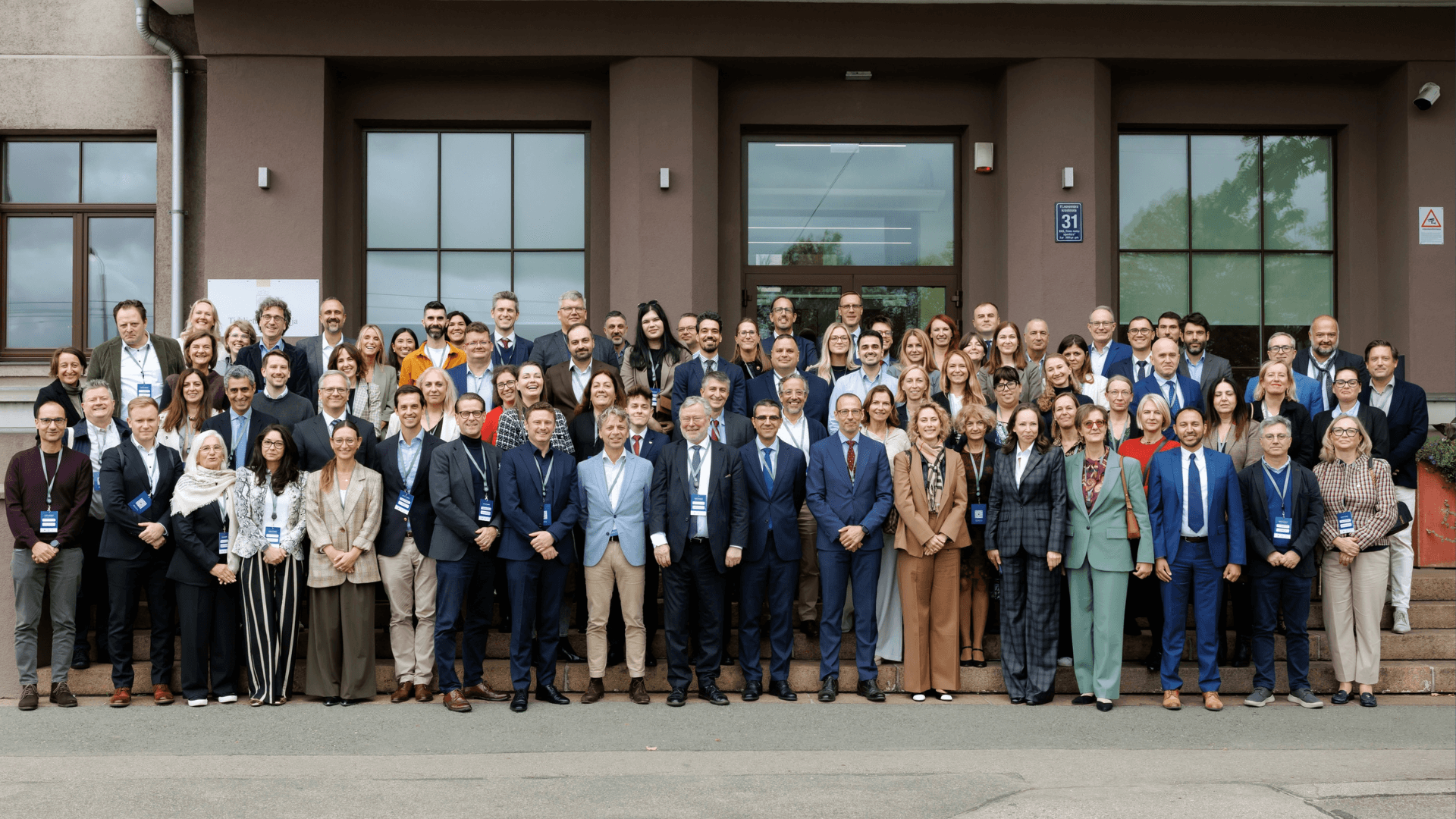
On 24-25 September, the European Judicial Training Network held its inaugural AI Summit, titled ‘The Impact of AI on the Judiciary’, in Riga, generously hosted by the Judicial Academy of the Republic of Latvia.
The Summit brought together 62 judges, prosecutors and court staff from 30 countries, including EU Member States, candidate countries and the Western Balkans, alongside 23 experts, speakers, partner representatives and organisers.
A new approach to judicial training on AI
Artificial Intelligence is rapidly transforming judicial work, from legal research and evidence assessment to court administration. Against this backdrop, the EJTN Summit addressed a pressing question for judicial training institutions across Europe: what AI-related skills do justice practitioners need, and how should these skills be taught?
The answer was explored through a new, highly interactive training format combining expert insights, hands-on workshops, peer-to-peer learning and cross-sector dialogue. Rather than positioning practitioners as passive participants, the Summit placed them at the centre of the learning experience, giving them space to share their own experiences, challenges and practical examples.
The aim was not simply to discuss the opportunities and risks of AI, but to move towards concrete training needs, priority competencies and practical solutions that can be integrated into judicial training programmes across Europe.
The Convener of the EJTN Working Group on Digitalisation, Deputy Director of the French National School for the Judiciary Haffide Boulakras, noted:
“As AI becomes part of our professional reality, the strength of our response lies not only in peer-to-peer learning, but also inter-professional learning, exchanging practical experiences, and building together the skills and above all – concrete tools needed for the justice systems of tomorrow.”
EJTN Secretary General, Judge Ingrid Derveaux, highlighted the context of the Summit in her opening remarks:
“AI is transforming the way justice practitioners work, making it essential that they have the knowledge and critical skills to understand both its opportunities and its risks.
This Summit is an important step in EJTN’s ongoing work to support the judiciary through the digital transformation of justice.”
The discussions highlighted that many justice practitioners are already confronting AI without adequate preparation. This makes accessible, practical and context-specific training essential. Training that enables practitioners to understand AI, critically assess its use and work with it responsibly is key.
Learning across disciplines and from practice
One of the Summit’s greatest strengths was its multidisciplinary character. Bringing together judges, prosecutors, court staff, academics, legal-tech experts, digital-forensics specialists, lawyers, international organisations and European judicial networks, it fostered a dialogue that extended well beyond purely technical considerations.
The diversity of expertise in the room enabled participants to assess AI as a multifaceted challenge for justice systems, encompassing legal, ethical, organisational and societal dimensions alongside technological innovation.
Through interactive workshops and practitioner-led discussions, participants shared first-hand experiences of AI use in judicial practice, examined challenges encountered in their work and exchanged practical cases that can inform future training. They also explored emerging “grey zones”, including Shadow AI, which means the informal and unregulated use of AI tools in professional settings.
The Summit focused on the essential skills justice practitioners need to navigate AI while safeguarding the Rule of Law and fundamental rights. Topics included AI literacy, responsible and ethical use of generative AI, transparency, critical thinking, fundamental rights safeguards, cybersecurity, bias and accuracy risks, as well as developments in legal technology and digital forensics.
The discussions also addressed the human side of AI adoption: generational differences, resistance to change, the risk of critical skills being eroded through over-reliance on technology, and the different pace at which AI is being adopted across the judiciary.
A central objective was to ensure that judicial training keeps pace with technological developments while equipping practitioners with the judgement and critical skills needed to understand both what AI can offer and where its limitations lie.
Towards a European AI training ecosystem
The Summit also looked beyond the event itself. A key ambition was to map existing AI training resources, identify gaps and strengthen coordination between judicial training institutions at European and national levels.
By actively involving participants in the creation and exchange of knowledge, the Summit helped shape a shared understanding of the competencies that future AI training should address and how resources can be better shared and adapted across jurisdictions.
This work contributes to the objectives of the European Judicial Training Strategy 2025–2030, particularly its focus on digital transformation and the responsible use of emerging technologies. EJTN will build on the Summit’s outcomes to develop practical recommendations and training materials that can be directly reused and adapted by national judicial training institutions across Europe.
The strong interest in the initiative, including applications from beyond Europe, demonstrates the growing demand for practical and collaborative AI training within the justice sector. The inaugural Summit lays the groundwork for future editions and for a European platform where justice practitioners can continue to develop the skills needed to navigate the opportunities and challenges of AI while safeguarding the Rule of Law, judicial independence and fundamental rights.
* * *
EJTN extends its sincere gratitude to the distinguished speakers and experts who contributed their knowledge and practical experience to this first AI Summit. Their engagement helped create a rich dialogue connecting policy, research, training and judicial practice.
Special thanks go to the Summit’s partners and contributing organisations, including the European Commission, the Court of Justice of the European Union (CJEU), the Council of Europe’s European Commission for the Efficiency of Justice (CEPEJ), UNESCO, the European Network of Councils for the Judiciary (ENCJ), the European Law Institute (ELI), the Consultative Council of European Judges (CCJE), the Council of Bars and Law Societies of Europe (CCBE), the European Network of Forensic Science Institutes (ENFSI), and the JuLIA Project, as well as representatives of national judicial institutions from across Europe. Their combined expertise helped bridge policy, judicial practice, legal research, technology and innovation, enriching the dialogue and ensuring a comprehensive examination of AI’s impact on justice systems.
EJTN warmly thanks the Judicial Academy of the Republic of Latvia and its Director Laila Jurcena and her team for hosting this inaugural edition of the AI Summit in Riga and for its commitment and support in making this innovative event possible.
A special thanks belongs to the Digitalisation Working Group Task Force, whose vision and collaborative work shaped the concept, methodology and interactive format of this new training activity, paving the way for a new approach to judicial training on artificial intelligence across Europe.
The EJTN AI Summit is set to return in Autumn 2027. More information will be updated in due course on the EJTN Online Training Catalogue.
To receive the latest updates from EJTN, follow us on LinkedIn and subscribe to our newsletter.