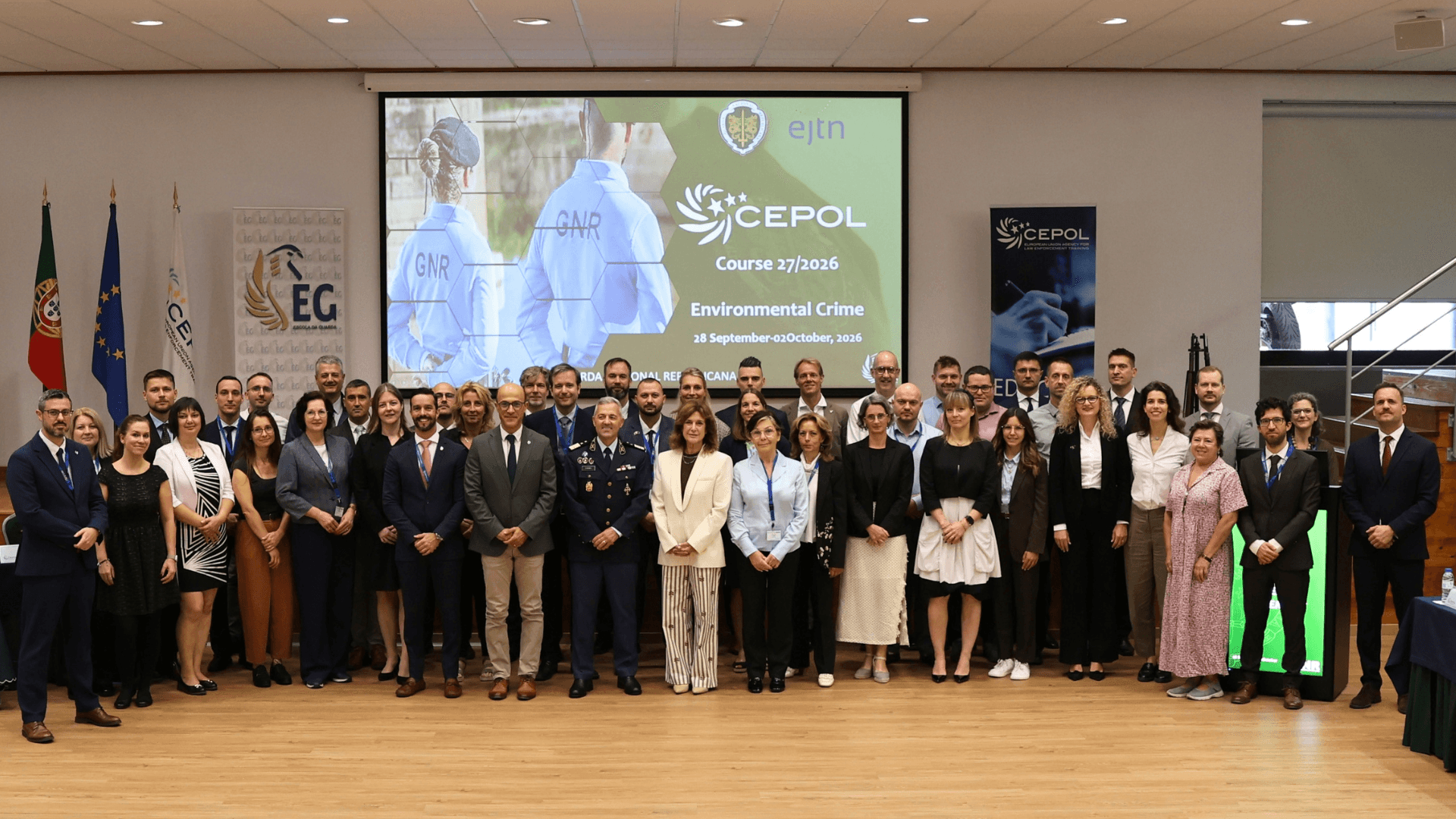
On 28-29 October, the European Judicial Training Network (EJTN) brought together over 80 directors and senior representatives of national judicial training institutions from across Europe in Dublin, Ireland, for the annual EJTN Conference of Directors. Organised together with the Judicial Council of Ireland and under the auspices of the Irish Presidency of the Council of the European Union, the conference provided a key opportunity to advance EJTN’s strategic planning ahead of the adoption of the Network’s next Strategic Plan.
Participants reflected on how judicial training can best respond to emerging challenges and evolving professional needs across Europe, including those arising from Artificial Intelligence and digitalisation. At the same time, discussions reaffirmed that the fundamental challenge remains safeguarding the Rule of Law through strong, independent and high-quality justice systems that inspire public trust and confidence.
In her intervention, Ms Justice Marguerite Bolger, Director of Judicial Studies, highlighted the special significance of this year’s conference:
“We are pleased to host the Directors’ Conference in Dublin as part of the Irish Presidency. This Presidency’s theme, ‘Ni neart go chur le cheile’ (“strengh in unity”) reflects a principle that lies at the heart of the right to equal and non-discriminatory treatment, which is a cornerstone of EU law.
The conference will explore the application of EU equality law, with a particular focus on the prohibition of racial discrimination. We hope this will support member institutions in developing effective training resources and practical guidance on this important area of EU law.”
The conference was opened by Ms Justice Nuala Butler, Chair of the Judicial Studies Committee of the Judicial Council of Ireland; Mr Justice Donal O’Donnell, Chief Justice of Ireland; Catherine Ardagh, Minister of State at the Department of Justice, Home Affairs and Migration; Michael McGrath, European Commissioner for Democracy, Justice, the Rule of Law and Consumer Protection, who addressed participants through a video message; and Judge Ingrid Derveaux, Secretary General of EJTN. Together, they highlighted the importance of judicial training in strengthening the Rule of Law, supporting judicial independence and preparing Europe’s justice systems for the challenges of the future.
Moreover, during the second day of the Conference, EJTN members convened the Extraordinary General Assembly and adopted a resolution reaffirming EJTN’s role in supporting judicial training and cooperation across Europe. The resolution highlighted the importance of coordination between the European and national levels, based on a model that combines close cooperation within EJTN with the autonomy of national judicial training institutions. It also underscored the promotion of a common European judicial culture and the contribution of judicial training to the consistent application of EU law, mutual trust and the Rule of Law.
Strengthening equality and non-discrimination through judicial training
The first day of the conference focused on strengthening judicial training in the field of equality and non-discrimination. Through expert presentations, discussions and interactive workshops, participants explored recent developments in European equality law and EU employment equality law, exchanged experiences from their respective jurisdictions and worked together on practical approaches to integrating these topics into national judicial training programmes. Particular attention was paid to employment equality, the protection of minorities and the practical application of anti-discrimination principles.
The exchanges, led by Ms Justice Marguerite Bolger, His Honour Judge Roderick Maguire, Justice Seamus Given, Her Honour Judge Paula Murphy and Judge Diogo Ravara, highlighted the important role of judges, prosecutors, court staff and judicial trainers in promoting equal access to justice while safeguarding fundamental rights and the Rule of Law throughout Europe. Participants also explored how judicial training can support the consistent application of European equality standards while remaining responsive to national legal and institutional contexts.
Preparing EJTN’s next strategic chapter
Alongside the discussions on equality and non-discrimination, representatives of EJTN members, associate members and observers turned their attention to the future direction of the Network. Building on the work initiated at the 2026 General Assembly in Cyprus, participants contributed to shaping the priorities that will underpin the EJTN Strategic Plan 2028-2034.
Through a series of workshops and exchanges, delegates identified the areas where European judicial training can deliver the greatest added value in the years ahead, while considering how EJTN can continue to support the implementation of the European Judicial Training Strategy 2025-2030. Discussions examined the Network’s role as a hub of expertise and cooperation, its contribution to the consistent application of EU law and the development of innovative approaches to judicial training.
The second day focused on translating these discussions into concrete actions. The discussions also looked ahead to the future of the Network. Members exchanged views on the priorities that should guide EJTN’s Strategic Plan 2028-2034 and considered how judicial training can continue to respond to the evolving needs of Europe’s justice systems.
A shared commitment to the Rule of Law
While the conference addressed a wide range of practical and strategic questions, discussions repeatedly returned to one central theme: the role of judicial training in safeguarding the Rule of Law in a rapidly changing world.
Participants reflected on how justice systems are adapting to technological and societal developments, including the growing use of Artificial Intelligence and digital tools. These developments offer significant opportunities to improve efficiency, accessibility and the delivery of justice. At the same time, they raise important questions about transparency, accountability, fundamental rights and public confidence in judicial institutions.
Against this backdrop, delegates underlined the importance of ensuring that justice practitioners possess not only the technical knowledge needed to navigate these changes, but also a strong understanding of the values that underpin European justice systems. Throughout the conference, participants stressed that innovation and digital transformation must remain firmly anchored in the principles of judicial independence, equality before the law and respect for fundamental rights.
Reflections from the Conference
The discussions in Dublin were enriched by contributions from judicial leaders and representatives of European institutions, who reflected on the future of judicial training, digital transformation and the importance of safeguarding the Rule of Law.
European Commissioner for Democracy, Justice, the Rule of Law and Consumer Protection Michael McGrath highlighted EJTN’s role at European level:
“EJTN’s real strength is that it brings Europe’s national judicial training institutions together. By connecting them, supporting them and enabling the exchange of expertise, you help build what our Union depends on: mutual trust, a shared European judicial culture and the consistent application of EU law.
That role will only grow as our justice systems go digital. A strategy with clear priorities will help EJTN meet the challenges ahead, and I look forward to continuing our cooperation so that judicial training keeps serving justice, the rule of law and democracy across our Union.”
Hubert Gambs, Deputy Director-General for Digital Transformation, Justice and Consumers at the European Commission’s Directorate-General for Justice and Consumers (DG JUST), underlined the importance of training in supporting the digital transformation of justice across Europe:
“We must boost the training of judges, prosecutors and court staff to ensure that advances in digitalisation translate into concrete improvements in justice systems. Our collective objective is to equip every judge, prosecutor and court staff member in every EU Member State with the necessary digital skills, including AI and IT literacy. Achieving this at scale requires coordinated implementation at national level, supported by effective cooperation and synergies at European level.
I encourage EJTN to play a strong coordinating role in aligning its members’ programmes and activities with the priorities of the European Judicial Training Strategy and ensuring synergies between EU-level and national judicial training. This is where EJTN’s unique added value lies. In this respect, I invite EJTN to build on its distinctive role as a network bringing national judicial training institutions together.”
EJTN Secretary General, Judge Ingrid Derveaux reflected on the role of EJTN and judicial training in helping Europe’s justice systems respond to emerging challenges while upholding the Rule of Law:
“As Europe’s justice systems continue to evolve, an essential question is not only what technologies we adopt but how we prepare justice practitioners to use them responsibly. Decisions about the content of judicial training must be shaped collectively by Europe’s national training institutions, and EJTN has a key role to play in facilitating that reflection and cooperation across borders.
While training on the digitalisation of justice and Artificial Intelligence is increasingly important, our responsibility extends beyond technology. We must continue to provide high-quality training across all areas of judicial and legal matters, while equipping judges, prosecutors and court staff with the skills, judgement and critical thinking needed to ensure meaningful human oversight and uphold the Rule of Law.
At the same time, maintaining a strong dialogue with European citizens is essential. Public trust in justice depends not only on innovation, but on confidence that technology serves justice rather than replaces human responsibility, judicial independence and the fundamental values on which the Rule of Law rests.”
Looking ahead
The discussions held in Dublin will directly inform the development of EJTN’s Strategic Plan 2028-2034, helping to shape the Network’s priorities for the years ahead.
The Strategic Plan is expected to be presented for adoption at the 2027 EJTN General Assembly in Vilnius, Lithuania. Building on the outcomes of the Conference of Directors, it will provide the framework through which EJTN and its members continue to support judicial training, strengthen cooperation and contribute to a resilient and effective European area of justice.
***
EJTN wants to thank the Director of Judicial Studies, Ms Justice Marguerite Bolger, and her team, as well as Ms Justice Nuala Butler, Chair of the Judicial Studies Committee, and Ms Maria Fitzgerald, Associate Director of Judicial Studies, for their professionalism and dedication in the organisation and delivery of this year’s Conference of Directors.