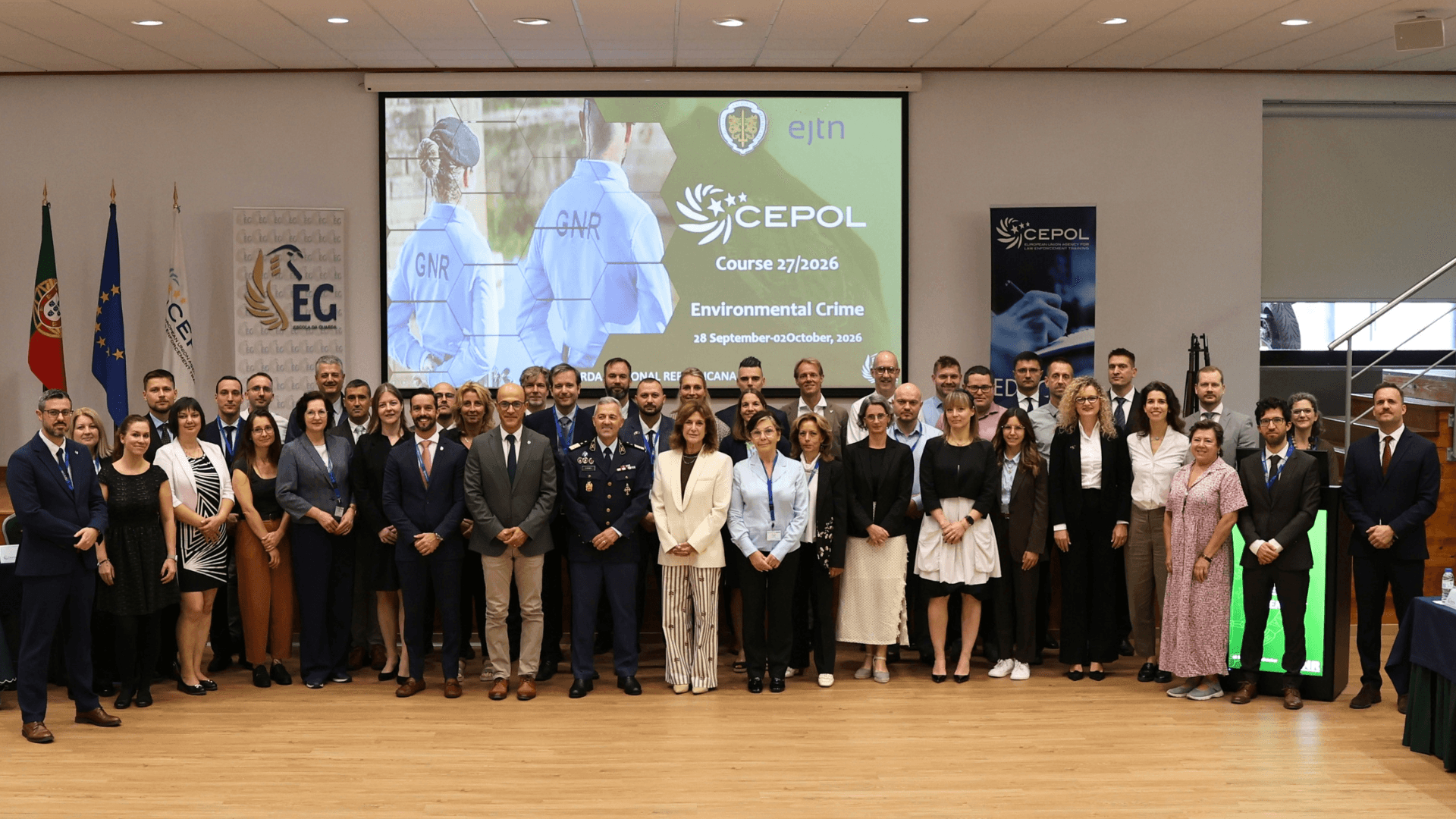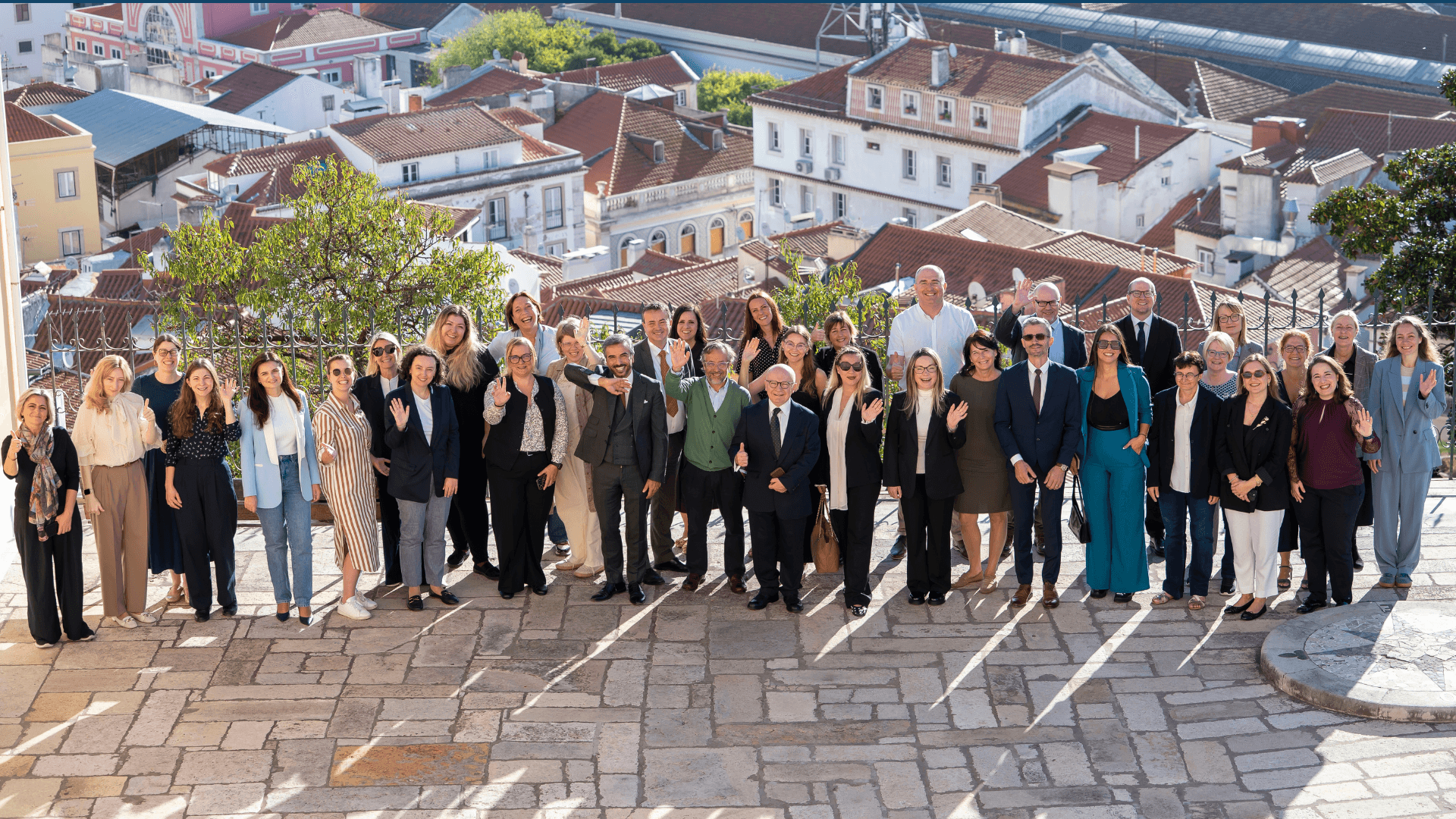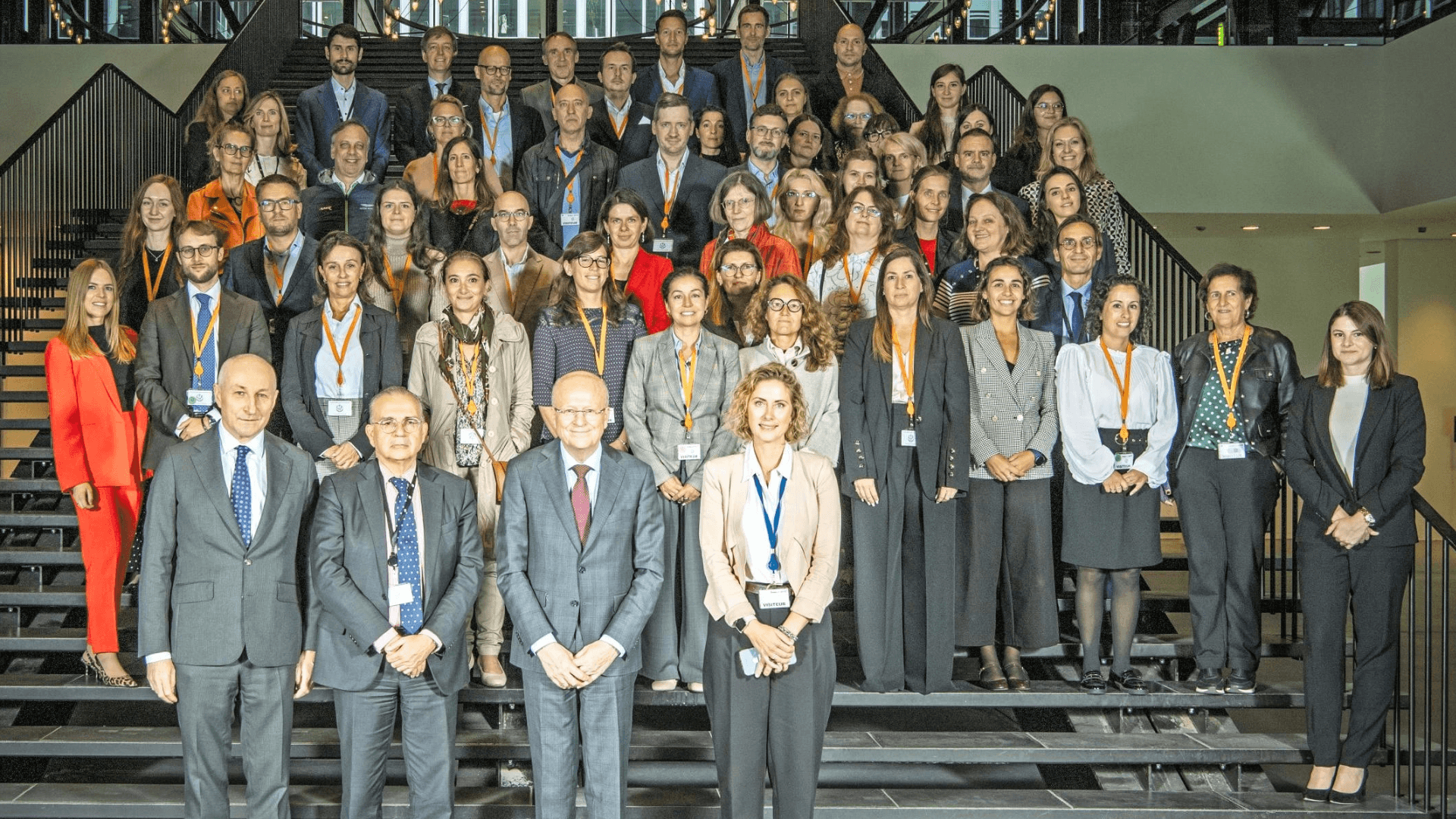
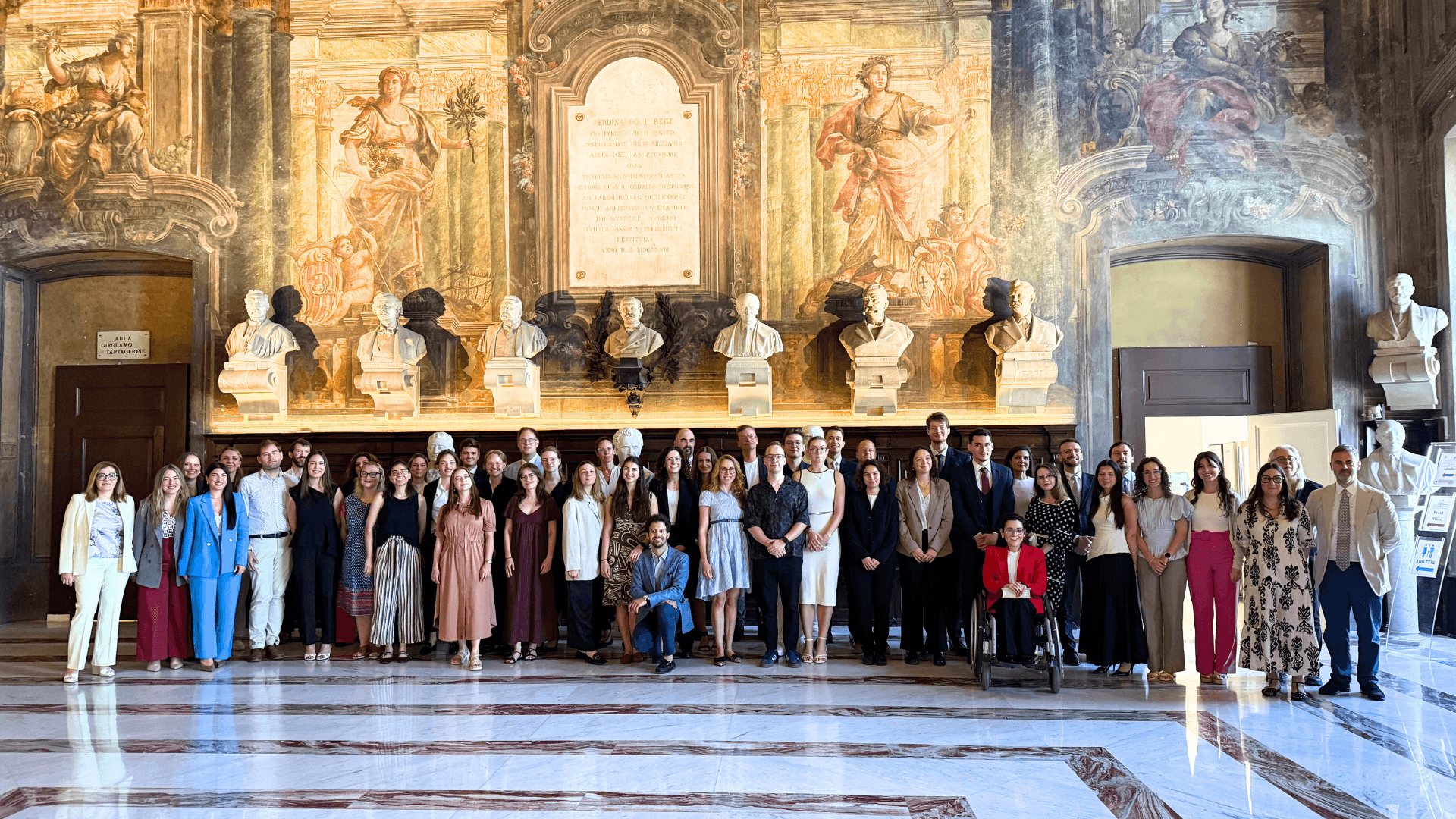
43 teams of judicial trainees from across Europe took part in the 2026 THEMIS Competition semi-finals, presenting their views, challenging opposing arguments, and engaging with key issues in European law.
Held throughout spring and summer 2026, the semi-finals gave participants the opportunity to explore key questions of European law, test their legal reasoning, and engage in lively exchanges with fellow competitors.
Each semi-final centred on a distinct legal theme and combined academic analysis with practical presentation skills. Following the submission of written papers, teams showcased their work through lectures, role plays, video presentations, and joint performances.
With the 2026 Grand Final set to take place in December at the Court of Justice of the European Union, we look back at some of the standout moments and results from this year’s semi-finals.
Semi-Final A: EU Criminal Law
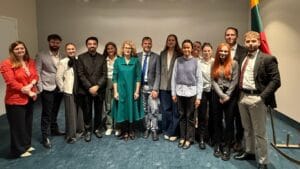
Host: The National Courts Administration of the Republic of Lithuania
During the Semi-Final A, teams debated a wide range of contemporary criminal law challenges, including Artificial Intelligence in criminal proceedings, cross-border evidence gathering, online hate speech, asset confiscation, universal jurisdiction, intellectual property crime, and the protection of fundamental rights in an increasingly interconnected European legal landscape.
- Winner: Team France
- Runner-up: Team Romania I
- Third place: Team Romania II
- Selected for the THEMIS Journal: Team France, Team Germany, and Team Romania I
- Qualified for the Grand Final:
- Team France: Chloé Landemaine, Morgane Evanghelou, Marine Motte, and Lucille Vidal
- Team Romania I: Ariana Ardelean, Maria-Francesca Prejneanu, Andrei-Cristian Savu, and Ionut Gabriel Visinescu
Semi-Final B: EU Administrative Law
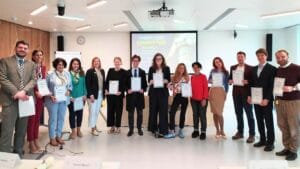
Host: The National Office for the Judiciary of Hungary
The Semi-Final Bprovided a forum for examining some of the EU’s most pressing administrative law challenges, including asylum and migration governance, disinformation and content moderation, tax justice, public procurement remedies, compensation for historical injustices, as well as the balance between European integration and national sovereignty.
- Winner: Team France
- Runner-up: Team Romania II
- Third place: Team Greece
- Special Awards:
- Best Performance: Team Romania I
- Best Papers: Team France, Team Germany I, and Team Romania I
- Outstanding performance under jury questioning: Pedro Castro Oliveira (Team Portugal II)
- Qualified for the Grand Final:
- Team France: Roxanne Delgado, Camille Flachy, Margot Kessler, and Théo Sondey
- Team Romania II: Ciprian Florentin Ciuchea, Patricia Cristea, Teodor Marcan, and Artiom Radu
Semi-Final C: EU Civil Law
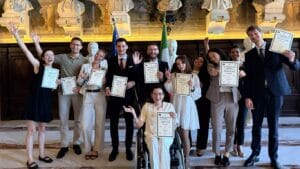
Host: Italian School for the Judiciary (SSM), Naples
From AI liability, digital evidence and online consumer protection to mediation, environmental litigation, pay transparency, trade secrets, and emerging questions of identity and intellectual property, participants of the Semi-Final C explored how European civil justice can adapt to rapidly evolving technological and societal realities.
- Winner: Team Romania
- Runner-up: Team France
- Third place: Team Austria
- Special Awards:
- Best Papers: Team France, Team Greece, and Team Italy
- Qualified for the Grand Final:
- Team Romania: Crina-Teodora Mihai, Ioan Ilieș Neamt, Marian-Răzvan Popescu, and Alexandra Șipoteanu
- Team France: Karine Chone, Lucie Desfontaine, Mélise Juliat, and Mathias Pronost
Semi-Final D: Judicial Ethics and Professional Conduct

Host: The German Judicial Academy
During Semi-Final D, participants examined the ethical and professional challenges confronting modern judiciaries, exploring judicial independence, public trust, freedom of expression, Artificial Intelligence, gender representation, dissenting opinions, and the boundaries of judicial responsibility in democratic societies.
- Winner: Team France
- Runner-up: Team Germany
- Third place: Team Italy
- Special Awards:
- Best Presentation: Team Hungary
- Best probing questions: Team Germany
- Best balance: Team Spain
- Best Papers: Team Greece I, and Team Romania
- Qualified for the Grand Final:
- Team France: Juliette Beynel, Eva Boutez, Laura Frangialli, and Valentine Gaidon
- Team Germany: Nils Imgarten, Fabian Matz, Anna-Lena Ohnholz, and Christian Renno
EJTN extends its sincere thanks to all the hosting institutions, tutors, judges and national coordinators whose dedication makes the THEMIS Competition possible. We also express our sincere appreciation to the European Commission for its ongoing support of this initiative, which continues to inspire and connect Europe’s future justice practitioners.
Think you know the THEMIS Competition? Discover 15 facts that highlight the history, impact, and unique features of one of EJTN’s flagship activities.
To learn more about the THEMIS Competition, visit our website: https://ejtn.eu/activity/themis/
For the latest updates from EJTN, follow us on LinkedIn and subscribe to our newsletter.